Tuesday, September 29, 2009

INDONESIA - Big potential for Sharia banking

Big potential for Sharia banking

Reuters
Published: July 31, 2009, 22:58

Indonesia's Islamic market is set to overtake Malaysia's thanks to the growth in Sharia-compliant lending, one of Indonesia's top Muslim clerics said last week.


Indonesia currently lags neighbouring Malaysia in terms of the market for Sharia-compliant financial products in the region, but that should change given stronger government support and demand in the domestic market, he said.


Ma'ruf Ameen, head of the Indonesian Ulema Council's (MUI) commission in charge of issuing edicts, including on Islamic markets, also said he expected more conventional banks to be turned into Islamic lenders in the near term.

Indonesia's Sharia banking assets accounted for just about $5 billion (Dh18.3 billion), or two per cent of the country's total banking assets in 2008, far lower than in Malaysia where Islamic banking accounted for some $68 billion, or 17 per cent, of total banking assets in late 2008.

"We will be bigger because the potential is much bigger," Ameen said in an interview.


"The political will from the government is there; from the president, the ministers. The government has also issued sukuk."


The government raised 5.56 trillion rupiah (Dh2 billion) from its retail, Islamic-compliant bonds in February and made a debut sale of $650 million worth of global Islamic bonds in April. Both issues attracted strong demand from investors.


Capitalising on the strong potential, several banks including Bank Central Asia, the country's No.. 3 lender by assets, and mid-sized bank Bank Panin, have bought smaller lenders and turned them into Sharia banking units. (Gulf News)

Posted via email from IBFN (Islamic Banking & Finance Network) at Posterous

INDONESIA - Big potential for Sharia banking

Big potential for Sharia banking

Reuters
Published: July 31, 2009, 22:58

Indonesia's Islamic market is set to overtake Malaysia's thanks to the growth in Sharia-compliant lending, one of Indonesia's top Muslim clerics said last week.


Indonesia currently lags neighbouring Malaysia in terms of the market for Sharia-compliant financial products in the region, but that should change given stronger government support and demand in the domestic market, he said.


Ma'ruf Ameen, head of the Indonesian Ulema Council's (MUI) commission in charge of issuing edicts, including on Islamic markets, also said he expected more conventional banks to be turned into Islamic lenders in the near term.

Indonesia's Sharia banking assets accounted for just about $5 billion (Dh18.3 billion), or two per cent of the country's total banking assets in 2008, far lower than in Malaysia where Islamic banking accounted for some $68 billion, or 17 per cent, of total banking assets in late 2008.

"We will be bigger because the potential is much bigger," Ameen said in an interview.


"The political will from the government is there; from the president, the ministers. The government has also issued sukuk."


The government raised 5.56 trillion rupiah (Dh2 billion) from its retail, Islamic-compliant bonds in February and made a debut sale of $650 million worth of global Islamic bonds in April. Both issues attracted strong demand from investors.


Capitalising on the strong potential, several banks including Bank Central Asia, the country's No.. 3 lender by assets, and mid-sized bank Bank Panin, have bought smaller lenders and turned them into Sharia banking units. (Gulf News)


Sunday, September 27, 2009

Islamic banks defy recession

Top 100 Islamic banks defy recession woes as combined assets grow 66%

Published: August 28, 2009, 22:43

Dubai: The Asian Banker has released its annual ranking of the world's top 100 Islamic banks by assets.


Combined assets of world's 100 top Islamic banks increased 66 per cent last year, bucking the trend of slow growth in other markets.


Asia's 300 largest banks, for example, only grew assets 13.4 per cent in the same period according to a survey conducted by The Asian Banker, a Singapore based publication.

"Islamic finance has seen an incredible surge in popularity, based on stronger regulatory regimes and a better international understanding of its dynamics," says Emmanuel Daniel, President and chief executive of The Asian Banker.


The report notes that Islamic finance assets are largely concentrated in Iran, Kuwait, Malaysia, Saudi Arabia and the UAE, but growth drivers have come from all over the region, in particular Al Rajhi Bank, which saw assets increase 32.1 per cent.


Banks in Bahrain, Malaysia, Kuwait, Qatar, Syria, and the United Kingdom also saw significant double or triple-digit asset growth.


Despite the financial turmoil in late 2008 that crippled so many large Western institutions, Islamic banks have continued to grow in prominence and size.


According to Asian Banker Research, the world's 100 largest wholly Islamic banks ranked by assets held more than $580 billion (Dh2.1 trillion) in assets in 2008, a 66 per cent increase from the $350 billion they held in the previous year.


The top ten banks remained largely the same as the ones that dominated the previous year, with Bank Melli Iran (BMI) still topping the list and Saudi Arabia's Al Rajhi Bank in second place, albeit catching up rapidly with a 32 per cent surge in assets compared with BMI's negligible growth.


Iranian banks are still the biggest Islamic banking players, holding seven out of the top 10 ranks, and 12 of the 100.


The Iranian banks also take up around 40 per cent of listing's assets. The four next-largest markets - the UAE, Malaysia, Saudi Arabia and Kuwait - each has similar asset sizes to one another, and together carve out nearly another 40 per cent of the ranking's assets combined, with smaller banks in 10 other markets rounding out the list.


Although two Islamic banks in the United Kingdom are large enough to be in the top 100, Islamic banks headquartered outside the Middle East, Asia and North Africa are still very small next to longer-established players in the Middle East.


East of Iran, as only Mal-aysian and Bangladeshi Islamic banks have a significant amount of assets. Indonesia, the world's most populous Muslim nation, only has two banks on the list, while Pakistan has three, and Brunei and Singapore one each.


Saudi Arabia's representation is proportionately the largest, as the three banks it has in the list are all in the top 35.


Sudanese banks appeared to be among the weakest, with only seven appearing in this year's ranking, down from 19 in the previous ranking.


Despite the size of the Iranian banks, Saudi Arabian banks are much more profitable - the three Saudi Arabian banks in the top 100 Islamic banks contributed 19 per cent of the ranking's total income.


Al Rajhi Bank had the highest net income figure of $1.74 billion - the only bank to break the billion-dollar mark, which was almost three times more than the second-placed Kuwait Finance House.


The bank also earned over five times the most profitable Iranian bank, Bank Tejarat. The bank that jumped the greatest in the asset ranking is Dubai's start-up lender Noor Islamic Bank, which climbed up the ranks to 20th this year. (Staff Report - Gulf News)

Posted via email from IBFN (Islamic Banking & Finance Network) at Posterous

Islamic banks defy recession

Top 100 Islamic banks defy recession woes as combined assets grow 66%

Published: August 28, 2009, 22:43

Dubai: The Asian Banker has released its annual ranking of the world's top 100 Islamic banks by assets.


Combined assets of world's 100 top Islamic banks increased 66 per cent last year, bucking the trend of slow growth in other markets.


Asia's 300 largest banks, for example, only grew assets 13.4 per cent in the same period according to a survey conducted by The Asian Banker, a Singapore based publication.

"Islamic finance has seen an incredible surge in popularity, based on stronger regulatory regimes and a better international understanding of its dynamics," says Emmanuel Daniel, President and chief executive of The Asian Banker.

The report notes that Islamic finance assets are largely concentrated in Iran, Kuwait, Malaysia, Saudi Arabia and the UAE, but growth drivers have come from all over the region, in particular Al Rajhi Bank, which saw assets increase 32.1 per cent.


Banks in Bahrain, Malaysia, Kuwait, Qatar, Syria, and the United Kingdom also saw significant double or triple-digit asset growth.


Despite the financial turmoil in late 2008 that crippled so many large Western institutions, Islamic banks have continued to grow in prominence and size.


According to Asian Banker Research, the world's 100 largest wholly Islamic banks ranked by assets held more than $580 billion (Dh2.1 trillion) in assets in 2008, a 66 per cent increase from the $350 billion they held in the previous year.


The top ten banks remained largely the same as the ones that dominated the previous year, with Bank Melli Iran (BMI) still topping the list and Saudi Arabia's Al Rajhi Bank in second place, albeit catching up rapidly with a 32 per cent surge in assets compared with BMI's negligible growth.


Iranian banks are still the biggest Islamic banking players, holding seven out of the top 10 ranks, and 12 of the 100.


The Iranian banks also take up around 40 per cent of listing's assets. The four next-largest markets - the UAE, Malaysia, Saudi Arabia and Kuwait - each has similar asset sizes to one another, and together carve out nearly another 40 per cent of the ranking's assets combined, with smaller banks in 10 other markets rounding out the list.


Although two Islamic banks in the United Kingdom are large enough to be in the top 100, Islamic banks headquartered outside the Middle East, Asia and North Africa are still very small next to longer-established players in the Middle East.


East of Iran, as only Mal-aysian and Bangladeshi Islamic banks have a significant amount of assets. Indonesia, the world's most populous Muslim nation, only has two banks on the list, while Pakistan has three, and Brunei and Singapore one each.


Saudi Arabia's representation is proportionately the largest, as the three banks it has in the list are all in the top 35.


Sudanese banks appeared to be among the weakest, with only seven appearing in this year's ranking, down from 19 in the previous ranking.


Despite the size of the Iranian banks, Saudi Arabian banks are much more profitable - the three Saudi Arabian banks in the top 100 Islamic banks contributed 19 per cent of the ranking's total income.


Al Rajhi Bank had the highest net income figure of $1.74 billion - the only bank to break the billion-dollar mark, which was almost three times more than the second-placed Kuwait Finance House.


The bank also earned over five times the most profitable Iranian bank, Bank Tejarat. The bank that jumped the greatest in the asset ranking is Dubai's start-up lender Noor Islamic Bank, which climbed up the ranks to 20th this year. (Staff Report - Gulf News)


Islamic finance industry must broaden portfolios

Islamic finance industry must broaden portfolios

By Trevor McFarlane, Special to Gulf News
Published: September 18, 2009, 22:16

Islamic finance is winning many fans but further evolution is necessary.


Islamic investment banking is being described as the darling of the new financial age. At least that has been the overriding theme of much of the industry talk and articles written since the onset of the global crisis. One Asian newspaper recently described Islamic finance as the emerging "blue ocean", which is a reference to the business strategy book written by W. Chan Kim and Renée Mauborgne of INSEAD, an international business school. The two business gurus promote creating new market space or "blue ocean" rather than competing in an existing industry.


Islamic finance certainly fits this description. However, much of what has been written fails to acknowledge that the sector has been hurt by the global financial crisis too - and it would be unrealistic to think otherwise. And moreover, it may turn out that Islamic investment banking will find itself reproducing some of the characteristics which make conventional finance so successful.


Of course, that is not to say that a prudent, asset-backed banking model such as the one on which the Islamic finance model works does not have good reason to look to the future with optimism. Unquestionably it does.


The industry is currently worth $700 billion (Dh2.6 trillion), according to rating agency Moody's, but has the potential to amount an impressive $4 trillion. Although precise figures are not available, the rate of the industry's expansion is estimated at somewhere between 10 per cent and 20 per cent annually.


Another reason for optimism is the fact that many recession-weary finance experts in the West are coming round to an acceptance of merits of Islamic banking.


The ethical principles which form the cornerstone of the industry are seen as a more sustainable alternative to conventional investment banking, which has found itself accused of unhinging the global economy.


So it is almost inevitable that the current furore in international banking has resulted in the surge of interest in Islamic finance we're now seeing.

The Sharia-compliant sector is emerging from the global financial crisis in a relatively healthier position than its conventional counterparts.


Any Islamic bankers who migrated from conventional institutions must think themselves most fortuitous when they look at the position their old colleagues now face.


Their favourable situation, however, did not come down to luck. Rather, Islamic banking made its way through the worst of the financial conflagration primarily on the back of its more prudent risk management principles.


That is not to say that the sector did not suffer at all - according to Standard & Poor's, sukuk issuance globally fell 56 per cent year-on-year to $14.9 billion last year, largely mirroring the same curve as their conventional version, the bond.


It remains to be seen quite how fully regional states and corporates will use debt issuance in the post-crisis era, though there is a feeling amongst insiders that the private sector will be more inclined toward it if central banks take a lead.


Islamic funds are struggling, too. The average return for Islamic equity funds for 2008 was the equivalent of -39 per cent, while the average returns for the first quarter of 2009 stood at the equivalent of -3.7 per cent, according to Ernst & Young.


Meanwhile, Islamic private equity is also hobbled by the slump and the broader issue of exit strategy, which has long dogged this particular sector.


While these nasty side effects of the global slump will pass in time, two challenges remain to be tackled, especially in the Gulf, if the industry is to reach what many see as its significant potential.


Firstly, Islamic finance currently lacks diversity in its investment banking portfolio. Put simply, the product and service offering is not deep enough. If the industry wants to evolve from being a niche player - albeit operating profitably in its "own space" - Islamic innovators would do well to look for more equivalents to conventional vehicles. Just like traditional investment banking, a diverse range of asset classes offering multifaceted products will be necessary.

Secondly, and this is interrelated to the need for more products, the sector, just like the whole region, has become over dependent on real estate. But given the real estate asset deflation witnessed across the Gulf over the last year, that strategy, at least for now, has lived out its last days.


A more balanced spread of asset classes will help the industry to reduce its vulnerability in any one sector. This, in turn, will give it the depth needed to win over more customers, and at a time when many are looking for alternatives to the conventional system this can only be a good thing.


- The writer is editorial manager of Oxford Business Group, Abu Dhabi. Opinions expressed here are his own and do not reflect the views of Gulf News. (Gulf News 18/09/2009)

Posted via email from IBFN (Islamic Banking & Finance Network) at Posterous

Islamic finance industry must broaden portfolios

Islamic finance industry must broaden portfolios

By Trevor McFarlane, Special to Gulf News
Published: September 18, 2009, 22:16

Islamic finance is winning many fans but further evolution is necessary.


Islamic investment banking is being described as the darling of the new financial age. At least that has been the overriding theme of much of the industry talk and articles written since the onset of the global crisis. One Asian newspaper recently described Islamic finance as the emerging "blue ocean", which is a reference to the business strategy book written by W. Chan Kim and Renée Mauborgne of INSEAD, an international business school. The two business gurus promote creating new market space or "blue ocean" rather than competing in an existing industry.

Islamic finance certainly fits this description. However, much of what has been written fails to acknowledge that the sector has been hurt by the global financial crisis too - and it would be unrealistic to think otherwise. And moreover, it may turn out that Islamic investment banking will find itself reproducing some of the characteristics which make conventional finance so successful.


Of course, that is not to say that a prudent, asset-backed banking model such as the one on which the Islamic finance model works does not have good reason to look to the future with optimism. Unquestionably it does.


The industry is currently worth $700 billion (Dh2.6 trillion), according to rating agency Moody's, but has the potential to amount an impressive $4 trillion. Although precise figures are not available, the rate of the industry's expansion is estimated at somewhere between 10 per cent and 20 per cent annually.


Another reason for optimism is the fact that many recession-weary finance experts in the West are coming round to an acceptance of merits of Islamic banking.


The ethical principles which form the cornerstone of the industry are seen as a more sustainable alternative to conventional investment banking, which has found itself accused of unhinging the global economy.


So it is almost inevitable that the current furore in international banking has resulted in the surge of interest in Islamic finance we're now seeing.

The Sharia-compliant sector is emerging from the global financial crisis in a relatively healthier position than its conventional counterparts.


Any Islamic bankers who migrated from conventional institutions must think themselves most fortuitous when they look at the position their old colleagues now face.


Their favourable situation, however, did not come down to luck. Rather, Islamic banking made its way through the worst of the financial conflagration primarily on the back of its more prudent risk management principles.


That is not to say that the sector did not suffer at all - according to Standard & Poor's, sukuk issuance globally fell 56 per cent year-on-year to $14.9 billion last year, largely mirroring the same curve as their conventional version, the bond.


It remains to be seen quite how fully regional states and corporates will use debt issuance in the post-crisis era, though there is a feeling amongst insiders that the private sector will be more inclined toward it if central banks take a lead.


Islamic funds are struggling, too. The average return for Islamic equity funds for 2008 was the equivalent of -39 per cent, while the average returns for the first quarter of 2009 stood at the equivalent of -3.7 per cent, according to Ernst & Young.


Meanwhile, Islamic private equity is also hobbled by the slump and the broader issue of exit strategy, which has long dogged this particular sector.


While these nasty side effects of the global slump will pass in time, two challenges remain to be tackled, especially in the Gulf, if the industry is to reach what many see as its significant potential.


Firstly, Islamic finance currently lacks diversity in its investment banking portfolio. Put simply, the product and service offering is not deep enough. If the industry wants to evolve from being a niche player - albeit operating profitably in its "own space" - Islamic innovators would do well to look for more equivalents to conventional vehicles. Just like traditional investment banking, a diverse range of asset classes offering multifaceted products will be necessary.

Secondly, and this is interrelated to the need for more products, the sector, just like the whole region, has become over dependent on real estate. But given the real estate asset deflation witnessed across the Gulf over the last year, that strategy, at least for now, has lived out its last days.


A more balanced spread of asset classes will help the industry to reduce its vulnerability in any one sector. This, in turn, will give it the depth needed to win over more customers, and at a time when many are looking for alternatives to the conventional system this can only be a good thing.


- The writer is editorial manager of Oxford Business Group, Abu Dhabi. Opinions expressed here are his own and do not reflect the views of Gulf News. (Gulf News 18/09/2009)


Thursday, September 10, 2009

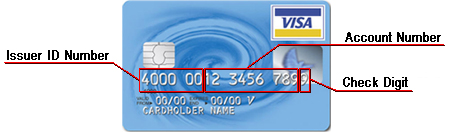
About Credit Card Numbers (BIN) and how they work


It’s a Visa credit card,while different card types offer different lengths of numerical digits, most major credit card issuers popular in the United States have 16 primary numbers on the front face of the card. Visa, MasterCard, and Discover cards all have 16 digits.


American Express is the only major credit card issuer in the U.S. with one less number – at 15 digits. Regardless of the length of numbers, their numerical sequencing is still guided by the same Luhn validation formula, the mathematical check sum equation that makes all valid credit card numbers error free.


The very first 6 credit card number sequence is known as the issuer identification number (IIN) or bank identification number (BIN). These first 6 numerical digits denote the credit card network and the banking institution the card is a member of. The issuer identifier number also incorporates the card type’s special identifying numerical prefix

The numbers found on credit cards have a certain amount of internal structure, and share a common numbering scheme.

The card number's prefix is the sequence of digits at the beginning of the number that determine the credit card network to which the number belongs. The card number's length is its number of digits.

The prefixes and lengths for the most common card types are:

Card Type Prefix(es) Length
American Express 34 or 37 15
BankCard 560–561 16
Diners Club / Carte Blanche* 300–305, and 38 14
Discover Card 6011,6500–6509** 16
JCB 3 16
JCB 1800,2131 15
MasterCard 51–55, 36 14,16
Visa 4 13 or 16

*As of November 8, 2004, MasterCard purchased the domestic (US) Diner's Club bin range. Diner's Club International BIN range will remain (starting with 38), but the 36 bin range will now be processed as MasterCards.
**As of October 1st, 2005, Discover Bank will include a new BIN in the range of 650000–650999.

In addition, the first 6 digits of the credit card number are known as the Bank Identification Number (BIN). These identify the institution that issued the card to the card holder.

Some credit card issuers choose to restrict the card numbers they issue to those which pass a checksum test, where the final digit of the card number is used to confirm the initial digits.

This has two benefits of preventing casual attempts to invent credit numbers (only one in ten will be valid), and also prevent mistakes when the card number is manually recorded. The checksum test for credit card numbers is the Luhn formula, described in Annex B to ISO/IEC 7812, Part 1.

American Express, in particular follows the following specific algorithm:

First 4 numbers, country code, currency code and card type (ie charge or credit card)
Next 2, card type (ie gold, platinum)
Next digit, billing cycle
Next 4 digits, account number
Fourth from last, card issue (begins at 1 and will go up if it's replaced because the card is lost or stolen)
Next two, card issued under the account (ie if there are additional card holders. begins at 00 and increments)
Last number, Luhn-10 check digit (used for verification)

Posted via email from IBFN (Islamic Banking & Finance Network) at Posterous

About Credit Card Numbers (BIN) and how they work


It's a Visa credit card,while different card types offer different lengths of numerical digits, most major credit card issuers popular in the United States have 16 primary numbers on the front face of the card. Visa, MasterCard, and Discover cards all have 16 digits.


American Express is the only major credit card issuer in the U.S. with one less number – at 15 digits. Regardless of the length of numbers, their numerical sequencing is still guided by the same Luhn validation formula, the mathematical check sum equation that makes all valid credit card numbers error free.


The very first 6 credit card number sequence is known as the issuer identification number (IIN) or bank identification number (BIN). These first 6 numerical digits denote the credit card network and the banking institution the card is a member of. The issuer identifier number also incorporates the card type's special identifying numerical prefix

 
The numbers found on credit cards have a certain amount of internal structure, and share a common numbering scheme.

The card number's prefix is the sequence of digits at the beginning of the number that determine the credit card network to which the number belongs. The card number's length is its number of digits.

The prefixes and lengths for the most common card types are:

Card Type Prefix(es) Length
American Express 34 or 37 15
BankCard 560–561 16
Diners Club / Carte Blanche* 300–305, and 38 14
Discover Card 6011,6500–6509** 16
JCB 3 16
JCB 1800,2131 15
MasterCard 51–55, 36 14,16
Visa 4 13 or 16


*As of November 8, 2004, MasterCard purchased the domestic (US) Diner's Club bin range. Diner's Club International BIN range will remain (starting with 38), but the 36 bin range will now be processed as MasterCards.
**As of October 1st, 2005, Discover Bank will include a new BIN in the range of 650000–650999.


In addition, the first 6 digits of the credit card number are known as the Bank Identification Number (BIN). These identify the institution that issued the card to the card holder.

Some credit card issuers choose to restrict the card numbers they issue to those which pass a checksum test, where the final digit of the card number is used to confirm the initial digits.

This has two benefits of preventing casual attempts to invent credit numbers (only one in ten will be valid), and also prevent mistakes when the card number is manually recorded. The checksum test for credit card numbers is the Luhn formula, described in Annex B to ISO/IEC 7812, Part 1.

American Express, in particular follows the following specific algorithm:

First 4 numbers, country code, currency code and card type (ie charge or credit card)
Next 2, card type (ie gold, platinum)
Next digit, billing cycle
Next 4 digits, account number
Fourth from last, card issue (begins at 1 and will go up if it's replaced because the card is lost or stolen)
Next two, card issued under the account (ie if there are additional card holders. begins at 00 and increments)
Last number, Luhn-10 check digit (used for verification)

Wednesday, September 2, 2009

Top 100 Islamic banks defy recession woes as combined assets grow 66%

The Asian Banker has released its annual ranking of the world's top 100 Islamic banks by assets.

Combined assets of world's 100 top Islamic banks increased 66 per cent last year, bucking the trend of slow growth in other markets.


Asia's 300 largest banks, for example, only grew assets 13.4 per cent in the same period according to a survey conducted by The Asian Banker, a Singapore based publication.


"Islamic finance has seen an incredible surge in popularity, based on stronger regulatory regimes and a better international understanding of its dynamics," says Emmanuel Daniel, President and chief executive of The Asian Banker.

The report notes that Islamic finance assets are largely concentrated in Iran, Kuwait, Malaysia, Saudi Arabia and the UAE, but growth drivers have come from all over the region, in particular Al Rajhi Bank, which saw assets increase 32.1 per cent.


Banks in Bahrain, Malaysia, Kuwait, Qatar, Syria, and the United Kingdom also saw significant double or triple-digit asset growth.


Despite the financial turmoil in late 2008 that crippled so many large Western institutions, Islamic banks have continued to grow in prominence and size.


According to Asian Banker Research, the world's 100 largest wholly Islamic banks ranked by assets held more than $580 billion (Dh2.1 trillion) in assets in 2008, a 66 per cent increase from the $350 billion they held in the previous year.


The top ten banks remained largely the same as the ones that dominated the previous year, with Bank Melli Iran (BMI) still topping the list and Saudi Arabia's Al Rajhi Bank in second place, albeit catching up rapidly with a 32 per cent surge in assets compared with BMI's negligible growth.

Iranian banks are still the biggest Islamic banking players, holding seven out of the top 10 ranks, and 12 of the 100.


The Iranian banks also take up around 40 per cent of listing's assets. The four next-largest markets - the UAE, Malaysia, Saudi Arabia and Kuwait - each has similar asset sizes to one another, and together carve out nearly another 40 per cent of the ranking's assets combined, with smaller banks in 10 other markets rounding out the list.


Although two Islamic banks in the United Kingdom are large enough to be in the top 100, Islamic banks headquartered outside the Middle East, Asia and North Africa are still very small next to longer-established players in the Middle East.


East of Iran, as only Mal-aysian and Bangladeshi Islamic banks have a significant amount of assets. Indonesia, the world's most populous Muslim nation, only has two banks on the list, while Pakistan has three, and Brunei and Singapore one each.

Saudi Arabia's representation is proportionately the largest, as the three banks it has in the list are all in the top 35.


Sudanese banks appeared to be among the weakest, with only seven appearing in this year's ranking, down from 19 in the previous ranking.

Despite the size of the Iranian banks, Saudi Arabian banks are much more profitable - the three Saudi Arabian banks in the top 100 Islamic banks contributed 19 per cent of the ranking's total income.


Al Rajhi Bank had the highest net income figure of $1.74 billion - the only bank to break the billion-dollar mark, which was almost three times more than the second-placed Kuwait Finance House.


The bank also earned over five times the most profitable Iranian bank, Bank Tejarat. The bank that jumped the greatest in the asset ranking is Dubai's start-up lender Noor Islamic Bank, which climbed up the ranks to 20th this year. (www.GulfNews.com 29th August 2009)

Posted via email from IBFN (Islamic Banking & Finance Network) at Posterous

Top 100 Islamic banks defy recession woes as combined assets grow 66%

The Asian Banker has released its annual ranking of the world's top 100 Islamic banks by assets.

Combined assets of world's 100 top Islamic banks increased 66 per cent last year, bucking the trend of slow growth in other markets.


Asia's 300 largest banks, for example, only grew assets 13.4 per cent in the same period according to a survey conducted by The Asian Banker, a Singapore based publication.


"Islamic finance has seen an incredible surge in popularity, based on stronger regulatory regimes and a better international understanding of its dynamics," says Emmanuel Daniel, President and chief executive of The Asian Banker.

The report notes that Islamic finance assets are largely concentrated in Iran, Kuwait, Malaysia, Saudi Arabia and the UAE, but growth drivers have come from all over the region, in particular Al Rajhi Bank, which saw assets increase 32.1 per cent.


Banks in Bahrain, Malaysia, Kuwait, Qatar, Syria, and the United Kingdom also saw significant double or triple-digit asset growth.


Despite the financial turmoil in late 2008 that crippled so many large Western institutions, Islamic banks have continued to grow in prominence and size.


According to Asian Banker Research, the world's 100 largest wholly Islamic banks ranked by assets held more than $580 billion (Dh2.1 trillion) in assets in 2008, a 66 per cent increase from the $350 billion they held in the previous year.


The top ten banks remained largely the same as the ones that dominated the previous year, with Bank Melli Iran (BMI) still topping the list and Saudi Arabia's Al Rajhi Bank in second place, albeit catching up rapidly with a 32 per cent surge in assets compared with BMI's negligible growth.

Iranian banks are still the biggest Islamic banking players, holding seven out of the top 10 ranks, and 12 of the 100.


The Iranian banks also take up around 40 per cent of listing's assets. The four next-largest markets - the UAE, Malaysia, Saudi Arabia and Kuwait - each has similar asset sizes to one another, and together carve out nearly another 40 per cent of the ranking's assets combined, with smaller banks in 10 other markets rounding out the list.


Although two Islamic banks in the United Kingdom are large enough to be in the top 100, Islamic banks headquartered outside the Middle East, Asia and North Africa are still very small next to longer-established players in the Middle East.


East of Iran, as only Mal-aysian and Bangladeshi Islamic banks have a significant amount of assets. Indonesia, the world's most populous Muslim nation, only has two banks on the list, while Pakistan has three, and Brunei and Singapore one each.

Saudi Arabia's representation is proportionately the largest, as the three banks it has in the list are all in the top 35.


Sudanese banks appeared to be among the weakest, with only seven appearing in this year's ranking, down from 19 in the previous ranking.

Despite the size of the Iranian banks, Saudi Arabian banks are much more profitable - the three Saudi Arabian banks in the top 100 Islamic banks contributed 19 per cent of the ranking's total income.


Al Rajhi Bank had the highest net income figure of $1.74 billion - the only bank to break the billion-dollar mark, which was almost three times more than the second-placed Kuwait Finance House.


The bank also earned over five times the most profitable Iranian bank, Bank Tejarat. The bank that jumped the greatest in the asset ranking is Dubai's start-up lender Noor Islamic Bank, which climbed up the ranks to 20th this year. (www.GulfNews.com 29th August 2009)